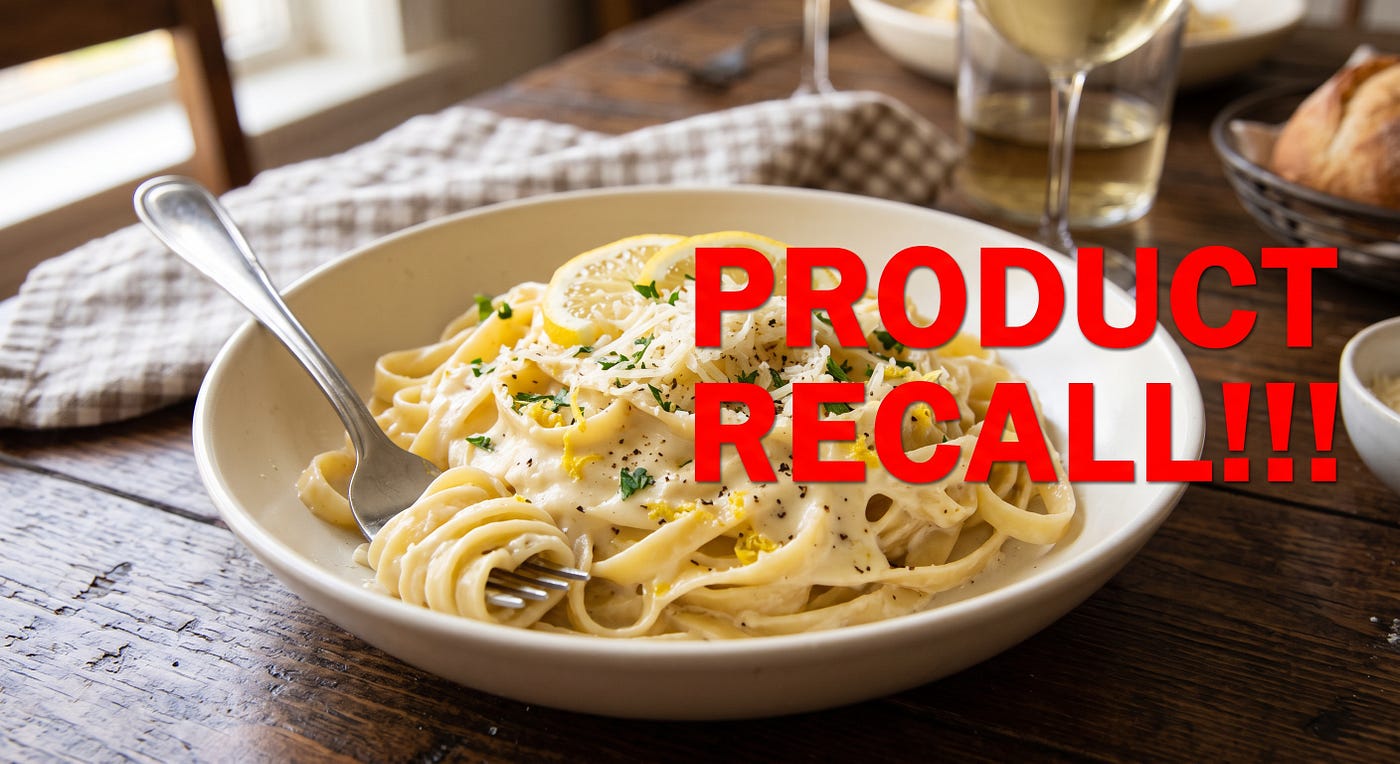
On 2 October, two separate Class I recalls landed in the US within hours of each other. Gias Foods pulled its Bettergoods Authentic Italian Lemon Alfredo Fettuccine, sold nationwide through Walmart, after routine sampling by the Washington State and Florida state agriculture departments turned up Listeria monocytogenes. The same day, Todd's Seeds LLC recalled six sprouting seed products, including alfalfa, broccoli and mixed varieties, nearly 37,500 units in total, after a supplier's alfalfa seed lot tested positive for Salmonella and E. coli. No illnesses were reported in either case.
That last point is the one worth sitting with. Neither recall started with a hospital reporting a cluster of cases. Both started with someone testing a product that was already on a shelf, before anyone got ill, and pulling the trigger. That is the system working as designed, but it is also a reminder of how thin the margin is between "working as designed" and a genuine outbreak when the catch depends on a state lab's routine swab rather than anything the manufacturer found first.
For a BRCGS site, both cases map onto audit clauses you will recognise immediately. The pasta recall is an environmental monitoring story. Listeria does not appear in a finished chilled or frozen product from nowhere, it establishes itself somewhere in the production environment, a drain, a condensate line, a piece of equipment that is hard to strip down, and it migrates from there. If your EMP has not flagged a positive in a while, ask whether that is because your environment is genuinely clean or because your swab sites have not moved in two years. Rotate them. Swab the hard-to-reach spots, not just the easy ones that always come back clear.
The seed recall is a supplier verification story. Six finished products, one contaminated raw material, one supplier. This is exactly why raw material risk assessment and supplier approval exist as standalone clauses rather than being folded into a generic goods-in check. A seed supplier selling into multiple product lines is a single point of failure that can take out your whole range in one go, the way it did here. If you cannot say with confidence when you last reviewed that supplier's own testing regime, or whether your specification actually requires pathogen testing on incoming lots rather than just assuming it does, that is worth a look before your next audit, not during it.
Both companies did the right thing once they knew: full recall, clear communication, no illnesses. The cheaper lesson sits upstream of that. Tighten the monitoring and the supplier checks enough that you are the one who finds the problem, not a state inspector three months after the product has already shipped.