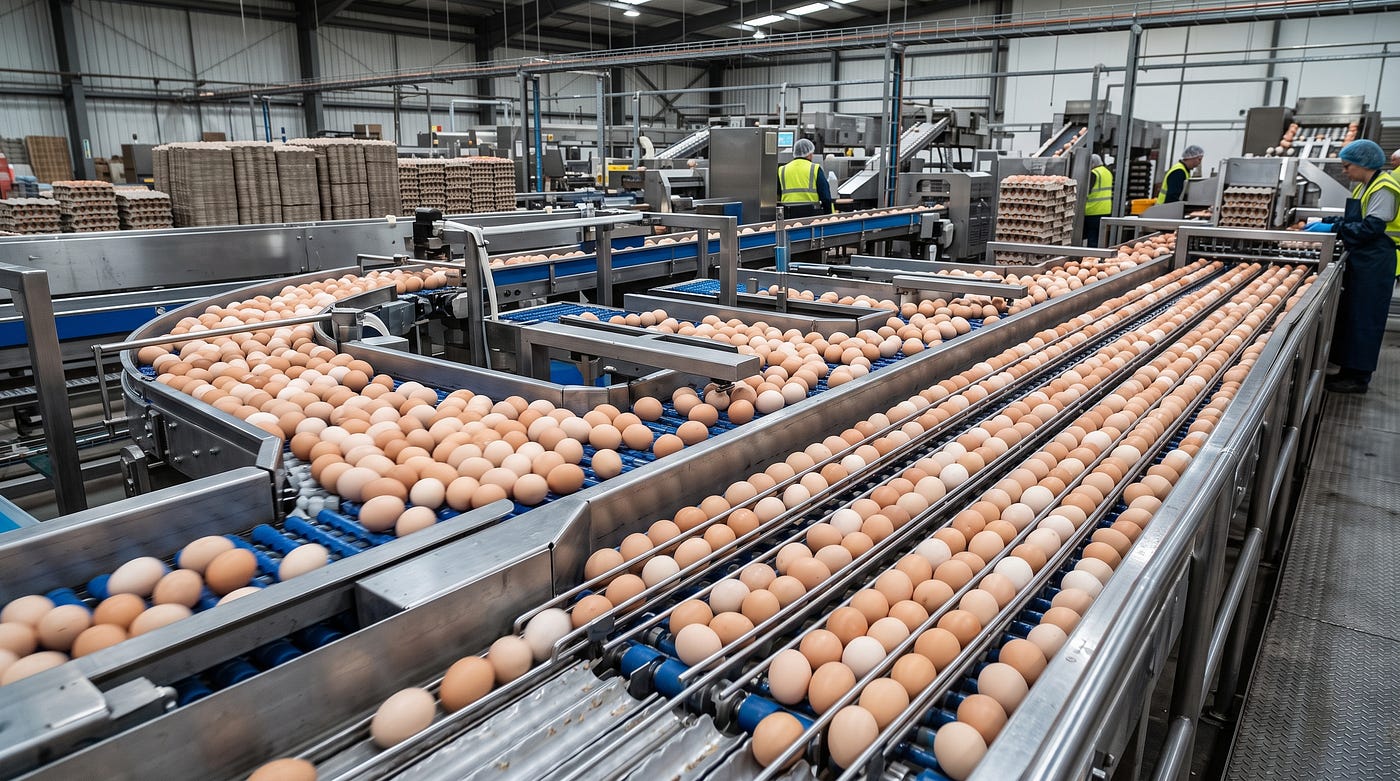
On October 10, 2026, the UK Food Standards Agency (FSA) issued an urgent Food Alert for Action, directing businesses to immediately withdraw and recall shell eggs originating from Ukrainian producer Yasensvit Ltd (stamped with the code 3UA1012066). The trigger for this sweeping intervention? Confirmed contamination with Salmonella Enteritidis.
Over the last 24 months, geopolitical and economic pressures have forced many UK and European food manufacturers to rapidly pivot their supply chains, seeking alternative sources for staple commodities like eggs, oils, and grains. But when procurement teams onboard new suppliers from regions with different agricultural controls without upgrading their technical verification, the risk of a catastrophic recall skyrockets.
Let’s break down where the controls likely failed before these eggs ever reached the UK border, and what BRCGS demands from your technical team right now.
Root Cause Analysis: What Control Was Missed?
When a primary agricultural commodity like shell eggs tests positive for Salmonella Enteritidis—a pathogen historically tied to flock infection and poor biosecurity—the failure almost always stems from inadequate supplier approval and raw material risk assessment by the purchasing site.
If you are a manufacturer who suddenly switched to a new international egg supplier and an auditor walked into your facility tomorrow, they would immediately drill into two specific BRCGS Food Safety Issue 9 clauses:
Clause 3.5.1.1 (Raw Material Risk Assessment): Did your technical team formally update the risk assessment when the geographical origin of the eggs changed? Pathogen prevalence, national biosecurity standards, and veterinary controls vary wildly by region. A risk assessment that treats a local Lion Mark egg the same as an imported alternative is a non-conformance.
Clause 3.5.1.2 (Supplier Approval): For a high-risk ingredient like raw shell eggs, relying on a basic self-assessment questionnaire is indefensible. The standard requires comprehensive verification, which for high-risk materials usually dictates a full GFSI-benchmarked certification or a rigorous, physically conducted second-party audit focused heavily on flock health and swabbing data.
The core failure here is treating procurement purely as a commercial exercise rather than a technical one.
Actionable Roadmap for Technical Teams
If your facility handles imported shell eggs, liquid egg products, or any primary agricultural commodity sourced from a newly established international supply chain, you must verify the following immediately:
Audit the Flock Swabbing Data: Do not accept a generic Certificate of Analysis (COA) for a single shipment. Demand to see the supplier’s historical environmental and flock swabbing data for Salmonella. If they cannot provide a robust history of negative results, you cannot trust the current batch.
Mandate Positive Release: For high-risk, unpasteurized ingredients arriving from new origins, implement a strict positive release protocol. The raw material must not enter the production stream until your own accredited laboratory testing confirms the absence of Salmonella.
Update Your Intake Checks: Ensure your goods-in team is thoroughly inspecting the specific stamp codes (e.g., 3UA1012066) against the FSA alert and matching them directly to your approved supplier list.
Stress-Test Your Mass Balance: If a recall like this hits, you need to know exactly which batches of your finished product contain the affected eggs. Conduct a traceability exercise today to ensure you can account for 100% of the material within 4 hours.
Securing Your Shifting Supply Chain
Global supply chains are more volatile than ever, and procurement teams are under immense pressure to find cost-effective alternatives. But food safety cannot be compromised for cost savings. As regulatory bodies like the FSA and the EU RASFF network intensify their border controls, your internal supplier approval systems must be the ultimate firewall.
If your business is diversifying its supplier base, onboarding new international sources, or if you simply need to ensure your raw material risk assessments will withstand BRCGS scrutiny, we can help.
At Global Food Consultancy, we specialize in conducting rigorous second-party supplier audits and independent pre-audit gap assessments that align perfectly with BRCGS expectations. Find out how our second-party supplier audits work, or get in touch to talk through your supply chain.